Computer Vision Syndrome (Digital Eye Strain): Your Eyes Are Tired… And It’s Not Just You
Lately, an increasing number of people find themselves experiencing a unique kind of tiredness, without quite knowing how to describe it. It isn’t the heavy‑limbed exhaustion of a late night, or the mental fog of a stressful week. It’s subtler, quieter, and yet, remains impossibly persistent.
This is because digital eye strain rarely arrives as a crisis. It creeps in gradually, manifesting in subtle ways: rereading the same line; losing focus more quickly; feeling depleted earlier in the day. Soon, your eyes start to sting. Your head feels weighted, almost as if gravity gained a few extra degrees. Words blur, then refocus. You shift in your chair, tilt your neck, blink more deliberately: all small rituals designed to keep going, because stopping simply isn’t an option.
Why? Because digital screens have become so deeply interwoven into work, communication, entertainment, and even rest, that opting out is no longer realistic. They are the medium through which life happens. And the data underscores that reality in ways that are genuinely staggering: the average U.S. desk worker now spends close to 100 hours a week in front of screens, with digital devices dominating the vast majority of the workweek’s waking hours.
Even after logging off from work, the pattern doesn’t shift much. Pre‑pandemic estimates already placed adult screen time at 6–10 hours per day, and children’s screen usage nearly doubled during that period. These numbers did not recede as life returned to “normal.” They’ve only continued to rise. What started out as a necessary but temporary switch has now become the background condition of modern life.
Moreover, these subtle symptoms of digital eye strain affect real performance. According to workplace research,
over 70% of workers report that vision-related discomfort impacts their productivity .
What is Computer Vision Syndrome?
Computer Vision Syndrome (CVS), also known as digital eye strain, is not a single diagnosis. It is a constellation of small, but insistent, signals that your visual system is overwhelmed. The symptoms seem ordinary, even mundane, so most people dismiss them long before they recognize them as part of a pattern.
Symptoms of Digital Eye Strain:
- dry, irritated, or red eyes
- blurry or shifting vision
- dull or persistent eye soreness
- headaches that intensify gradually over the day
- neck and shoulder tension that lingers long after work ends
Clinically, these symptoms are strongly associated with prolonged screen use across phones, tablets, laptops, and monitors. Current research suggests that roughly two‑thirds of people worldwide experience these symptoms. In the U.S., the number sits at around 65% of adults.
Yet most people do not call it “eye strain.” They just call it “a long day,” and over time, this normalization becomes a part of the problem.

What Causes Digital Eye Strain & Why Does It Feel Worse Than It Used To?
If you, too, feel like digital fatigue has intensified over the past few years, you’re not alone. While the pandemic rapidly accelerated digital dependence, more importantly, the digital habits forged then never truly disappeared. Remote work stayed. Virtual meetings stayed. Even social interaction and entertainment remained deeply tethered to screens. One study found that the prevalence of eye strain symptoms has reached up to 74% in post‑pandemic conditions.
However, if we move beyond just the number of hours we spend with screens, we can draw attention to the kind of visual workload digital interactions require.
1. Our eyes were not designed for a flat, unchanging world
Human vision evolved for dynamic environments. Depth, distance, and shifting focal points allowed our eyes to constantly adjust and engage different muscles. Screens flatten all of that into a single distance, a single focal plane, and a single source of light.
Our eyes work, continuously and subtly, to maintain that unnatural focus.
2. We blink significantly less
Studies consistently show that when looking at screens, people blink far less frequently. A reduced blink rate means the tear film dries out faster, leading to irritation, redness, and that sandpaper‑like sensation that can linger even after stepping away from a screen.
3. Posture quietly amplifies visual strain
Most people lean forward without noticing. Shoulders round, chin dipped, neck jutting out. None of this is dramatic in the moment, but over the course of an eight‑hour day… multiplied across weeks, months, years… the cumulative strain becomes difficult to ignore.
Small, Practical Adjustments That Genuinely Help Reduce Eye Strain From Screens
However, a massive lifestyle overhaul is not needed to improve your symptoms. The best strategies are surprisingly simple, if they become routine.
List of Services
-
Give your eyes a distance break:List Item 1
The 20 20 20 rule remains one of the most effective and accessible habits: every 20 minutes, look at something 20 feet away for 20 seconds. It relaxes the eye muscles, disrupts visual monotony, and rebalances the blink rate.
-
Revisit your workstation thoughtfully:List Item 2
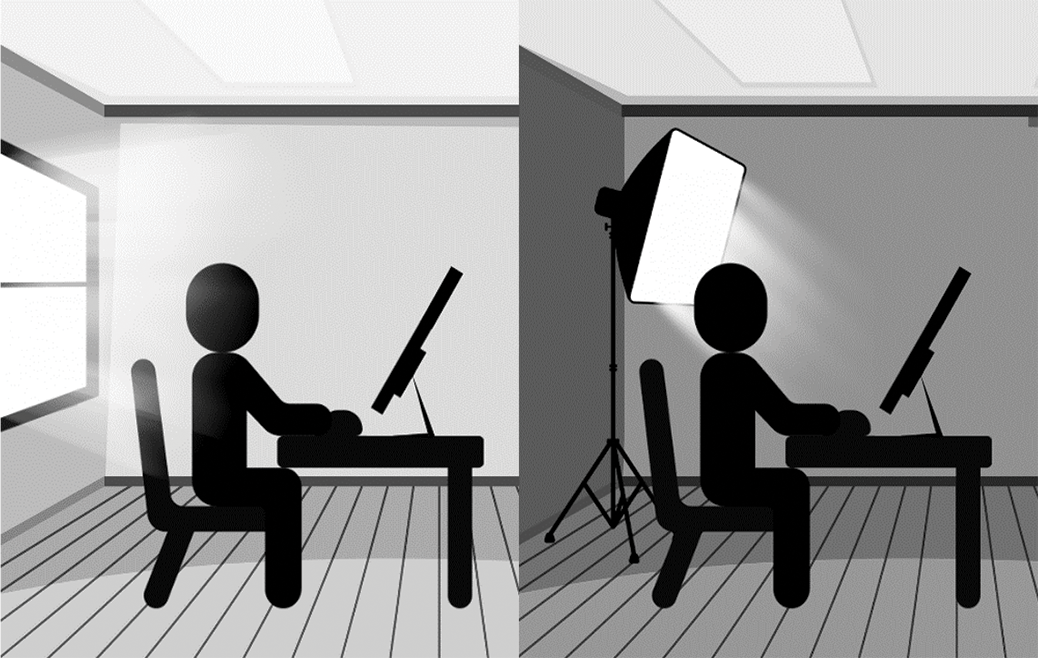
Ergonomic setups drift over time as screens sink lower, chairs slump, and external keyboards get nudged out of alignment. Resetting your space to place the top of your screen at or slightly below eye level, with your back supported and feet grounded, creates long term dividends in reduced strain.
-
Blink on purpose:List Item 4
It feels almost too simple, but blinking frequently is one of the most direct ways to counteract dryness and discomfort. Every few minutes, consciously close your eyes for just a moment, for a full, intentional blink. It resets moisture balance and reduces irritation.
-
Use built in screen tools:
Modern devices offer a range of visual comfort options: warmer tones, night mode, adaptive brightness, contrast adjustments. Experiment with small changes in light temperature can dramatically reduce end of day fatigue.
-
Blue light solutions (helpful, but not a cure-all):List Item 3
Blue light glasses and screen filters can reduce exposure. Specialized lenses like FL 41 are often beneficial for people with migraines or light sensitivity. However, keep in mind that these tools are most effective as part of a larger comfort strategy, not the sole solution.
The Factor Almost No One Considers: The Screen Itself
Do screens themselves cause eye strain & are some displays better for eye health?
Most eye strain advice focuses on user habits, and understandably so. But an overlooked truth is that traditional LED and LCD displays rely on backlighting, meaning they emit additional light directly into your eyes for as long as you use them. It’s bright, effective, and excellent for clarity, but not particularly gentle during prolonged use.
This is precisely where new display technologies come in.
Reflective LCD (RLCD) Technology
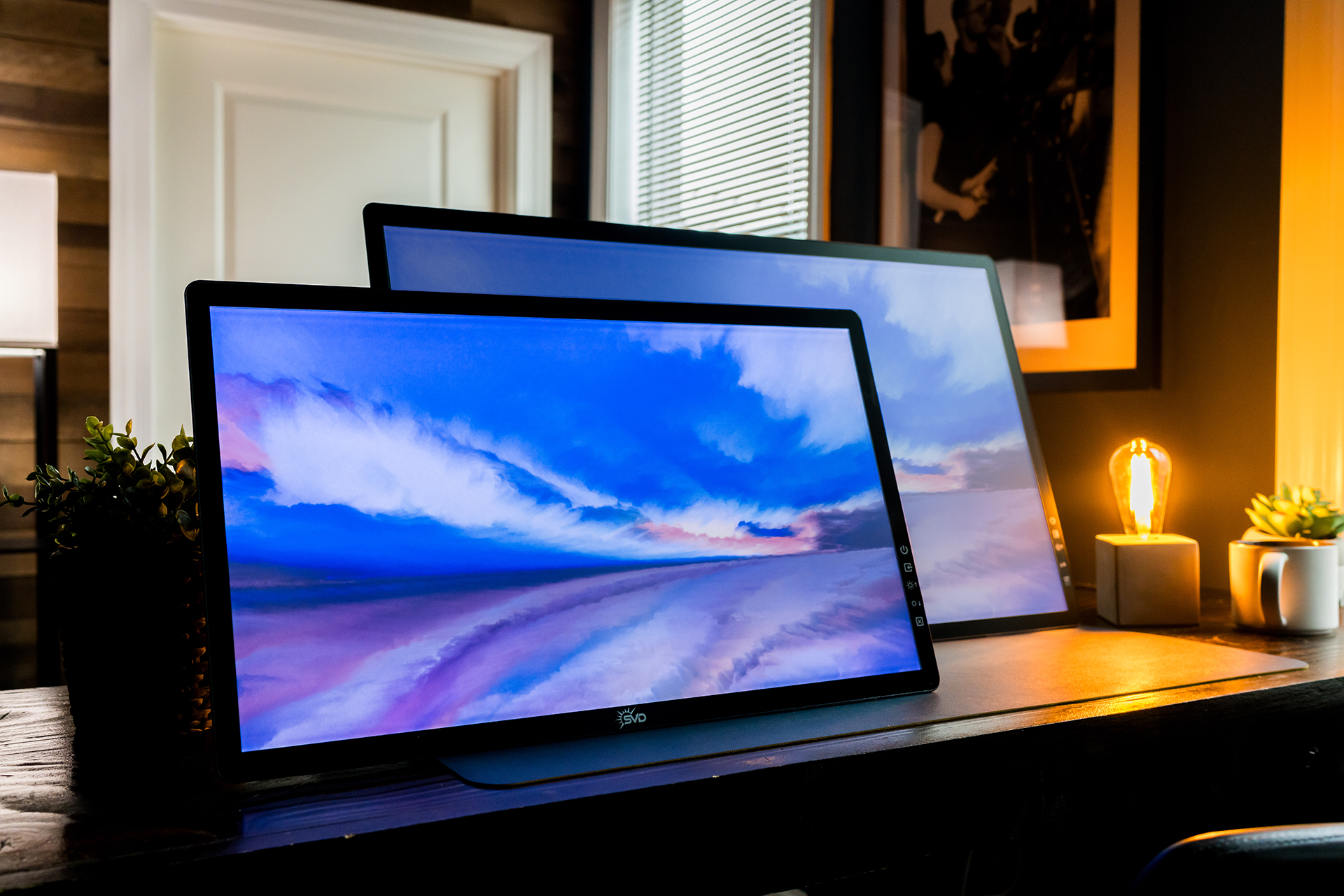
Instead of shining light outward, RLCDs use ambient light, reflecting it in a way which mimics the natural way we perceive the world. The experience feels calmer, softer, and often less fatiguing over long sessions.
Devices built for comfort
Monitors like the Sun Vision Display (SVD) rE range incorporate RLCD technology, eliminating backlight glare while maintaining full color and a practical refresh rate. They are not chasing extreme brightness or contrast and are designed to be easier on the eyes over many hours. For people who struggle with standard monitors despite every ergonomic adjustment, this difference can be profound.
What You Can Do Next
Ultimately, screens are not disappearing from our lives: they are the architecture of modern work and communication. However, what we can influence is how they affect us.
That starts with paying attention and genuinely noticing the signals your eyes have been quietly sending. From there, small adjustments create real relief, and exploring newer screen technologies can offer even deeper comfort if traditional setups keep falling short.
Your eyes have been working harder than you realize. Making a few thoughtful changes now can improve not just your comfort, but your focus and energy throughout the day.